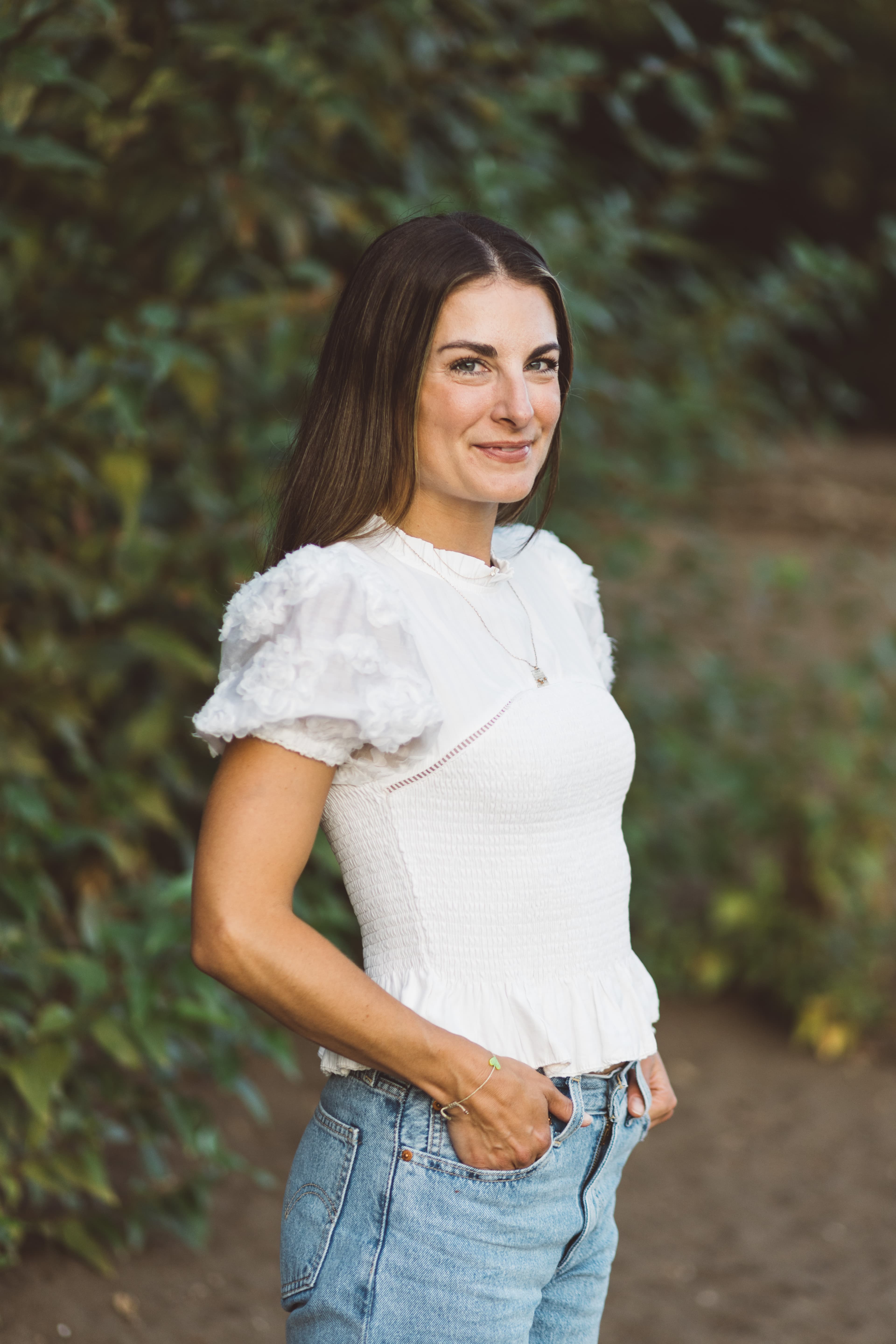
About Abby
I never knew why
reading felt
so hard for me
I was a strong student. I did well in school, went to college, built a career. But there was always something I couldn't quite name. Reading took longer than it should. Spelling never clicked the way it seemed to for other people. I worked twice as hard and assumed that was just how my brain worked.
Then one of my children was diagnosed with dyslexia, and everything shifted.
I threw myself into learning about dyslexia. I read the research. I talked to specialists. And somewhere in that process, I started recognizing myself in every description. So I got evaluated. Turns out, I have dyslexia too.
That personal experience is something I bring to every single student I work with. I know what it feels like to work hard and still feel like you're falling behind. And I know what it feels like when everything finally clicks.
Finding Orton-Gillingham
When we started looking for help with my child's reading, I quickly realized that most of what schools offer isn't designed for how struggling readers actually process language. The standard approaches assume a foundation that isn't there.
Orton-Gillingham was different from the first session. It's structured, sequential, and multisensory. It doesn't ask students to memorize words by sight or guess from context. It teaches the actual architecture of the English language, one piece at a time, using every pathway the brain has available.
Watching my child go from struggling to read at grade level to reading above it changed the direction of my life. Not because the dyslexia went away, but because she finally had the tools to work with how her brain is wired, not against it.
The Approach
What is Orton-Gillingham?
Orton-Gillingham (OG) was developed in the 1930s by Dr. Samuel Orton and Anna Gillingham. It was designed for students who struggle to learn to read through conventional methods — and nearly a century later, it remains the gold standard for structured literacy instruction.
OG is not a boxed curriculum or a one-size-fits-all program. It's a teaching approach. That distinction matters because it means instruction is built around each individual student, not a predetermined sequence.
Multisensory
Every lesson engages visual, auditory, and kinesthetic pathways simultaneously. Students see a letter, say its sound, hear it spoken, and trace or write it. This creates multiple neural pathways to the same information, making it stick.
Sequential and cumulative
Each lesson is written following the last and built specifically for that student. Skills build in a logical, cumulative order. Nothing is skipped. Nothing is assumed. This eliminates the gaps that cause so many students to fall behind.
Diagnostic and responsive
Every session is responsive. If a concept isn't landing, the approach shifts. If a student is ready to move faster, the pace picks up. The tutor continuously assesses and adjusts in real time.
Direct and explicit
Nothing is left for the student to figure out on their own. Every rule, every pattern, every exception is taught directly. This is the opposite of how most schools teach reading, where students are expected to pick up patterns implicitly.
From parent to practitioner
I didn't set out to become a tutor. I set out to help my own kids. But the more I learned, the more I realized how many families are going through exactly what we went through — parents who know something isn't clicking, but don't know where to turn.
I became certified in the Orton-Gillingham approach through Northwest Dyslexia Resources, an organization accredited by the Orton-Gillingham Academy and aligned with the International Dyslexia Association. My training included intensive coursework, a supervised practicum with on-site observations, and ongoing mentorship from experienced practitioners.
I've worked with over a dozen families across the Portland area. Every student is different. Every brain is different. I work with children who have a dyslexia diagnosis, children who are struggling readers without one, and students building their writing and grammar skills from the ground up through high school. The approach works because it meets each child exactly where they are.
Training & Credentials
Certification & affiliations
Certified Orton-Gillingham Practitioner
Certified through Northwest Dyslexia Resources, an accredited training program recognized by the Orton-Gillingham Academy. Training includes intensive coursework in the structure of the English language, multisensory teaching techniques, and a supervised clinical practicum.
International Dyslexia Association Aligned
Instruction follows the standards and guidelines set by the International Dyslexia Association (IDA) for structured literacy and evidence-based reading intervention.
Ongoing Professional Development
Continued mentorship and professional development through Northwest Dyslexia Resources, including advanced training in morphology, fluency instruction, and working with students across the reading spectrum.

A note to parents
If you're reading this, you probably already know something isn't quite right with your child's reading. Maybe you've been told they'll grow out of it, or they just need more practice, or they're not trying hard enough. I know how that feels.
Your child is not broken. They may just need a different approach. And with the right instruction, they can absolutely learn to read — and write — with confidence and joy.
You don't need a diagnosis to reach out. If something feels off, that's enough. I would love to talk with you about your child and what might help.